
IF YOU ARE IN IMMEDIATE DANGER, CALL OR TEXT 988 TO CONNECT WITH THE SUICIDE & CRISIS LIFELINE
SUPPORT IS AVAILABLE 24/7
IF YOU ARE IN IMMEDIATE DANGER, CALL OR TEXT 988 TO CONNECT WITH THE SUICIDE & CRISIS LIFELINE
SUPPORT IS AVAILABLE 24/7
IF YOU ARE IN IMMEDIATE DANGER, CALL OR TEXT 988 TO CONNECT WITH THE SUICIDE & CRISIS LIFELINE SUPPORT IS AVAILABLE 24/7 IF YOU ARE IN IMMEDIATE DANGER, CALL OR TEXT 988 TO CONNECT WITH THE SUICIDE & CRISIS LIFELINE SUPPORT IS AVAILABLE 24/7
Education & Training
Building organizations where neurodivergent people can thrive.
We help schools, healthcare teams, workplaces, and faith and community organizations better understand and support neurodivergent people. Through practical presentations, workshops, and systems consultation, we help organizations reduce barriers, strengthen belonging, and make suicide prevention part of everyday practice.

Start with a free introductory conversation.
Not sure where to begin?
We’ll help you identify the right topic and format.
Who We Work With
Practical education and training tailored to your setting, your people, and your goals.
Schools & Education
Help educators understand neurodivergent learners, respond to distress, and build learning environments where students feel supported and belong.
Topics include: classroom practices, school avoidance, discipline, family support, and suicide prevention.
Healthcare & Clinical Systems
Help clinical teams recognize neurodivergent needs and provide more accessible, affirming care across appointments, referrals, and follow-up.
Topics include: patient communication, intake practices, barriers to care, recognizing distress, and crisis response.
Corporate & Business
Equip leaders and teams to support different ways of thinking, communicating, and working, so neurodivergent employees can contribute and thrive.
Topics include: recruitment, onboarding, manager practices, workplace culture, burnout, and retention.
Faith & Community
Help staff, leaders, and volunteers create welcoming spaces where neurodivergent people and their families can participate, connect, and find support.
Topics include: sensory-friendly environments, family support, inclusive programming, and responding to distress.
We also welcome inquiries from nonprofits, universities, and professional training programs. Each engagement is tailored to your audience and goals.


Neurodivergent individuals are present in every organization. They are students, employees, patients, congregants, and leaders.
Yet most institutional systems were not intentionally designed with neurodivergent nervous systems in mind. The result is often unintentional strain:
Overstimulating environments
Rigid productivity expectations
Evaluation models that reward masking
Communication norms that penalize difference
Policies that increase burnout rather than resilience
Over time, this misalignment affects performance, retention, engagement, and well-being.
Strong institutions recognize that neurodivergent individuals are part of their systems, and effective leadership means intentionally designing for their unique needs.
Why This Matters Across Systems
When systems fail to support neurodivergent individuals, the impact doesn’t stay contained. It ripples outward, affecting teams, organizations, and entire communities.
Unmet needs, chronic stress, and ongoing misunderstanding increase mental health risks—including higher rates of suicide. These outcomes are shaped by environments that overlook, minimize, or misunderstand neurodivergent needs.
-
Reduced productivity and performance
Higher turnover and loss of talent
Absenteeism, disengagement, and burnout
Weakened innovation and problem-solving
-
Lower student engagement and academic achievement
Higher dropout rates and disrupted educational pathways
Increased disciplinary actions and school avoidance
Gaps in equity and long-term student outcomes
-
Delayed, missed, or incorrect diagnoses
Ineffective/mismatched treatment, and wasted resources
Increased crisis care and emergency utilization
Higher overall cost of care and system strain
-
Decreased participation and community connection
Stigma and silence around mental health needs
Loss of trust in leadership and support systems
Isolation of individuals and families who need care most
Our Four Training Focus Areas

1. Understanding Neurodiversity
We ground institutions in a practical, research-informed understanding of neurodivergence (executive functioning, sensory processing, communication styles, and stress response). This moves beyond surface-level awareness toward practical applications in how systems are designed and how people are supported.

2. Identifying Institutional Stressors
We help leaders evaluate how policies, expectations, discipline models, physical environments, and communication norms may unintentionally increase strain for neurodivergent individuals. Often, risk is embedded in routine practice.

3. Strengthening Protective Systems
We equip organizations with system-level strategies tailored to their unique needs. This includes designing environments that reduce masking and burnout, aligning metrics to reflect cognitive diversity, and strengthening leadership practices that build psychological safety. We also help build systems that prioritize clarity and predictability, while cultivating cultures where belonging and high standards coexist.

4. Integrating Suicide Prevention Into Culture
Suicide prevention is not a separate initiative. It is an outcome of well-designed systems. We provide guidance on how suicide risk may present differently in neurodivergent individuals and how institutions can strengthen early identification, safe help-seeking pathways, and crisis response protocols. Prevention is most effective when embedded into leadership, policy, and everyday interaction.
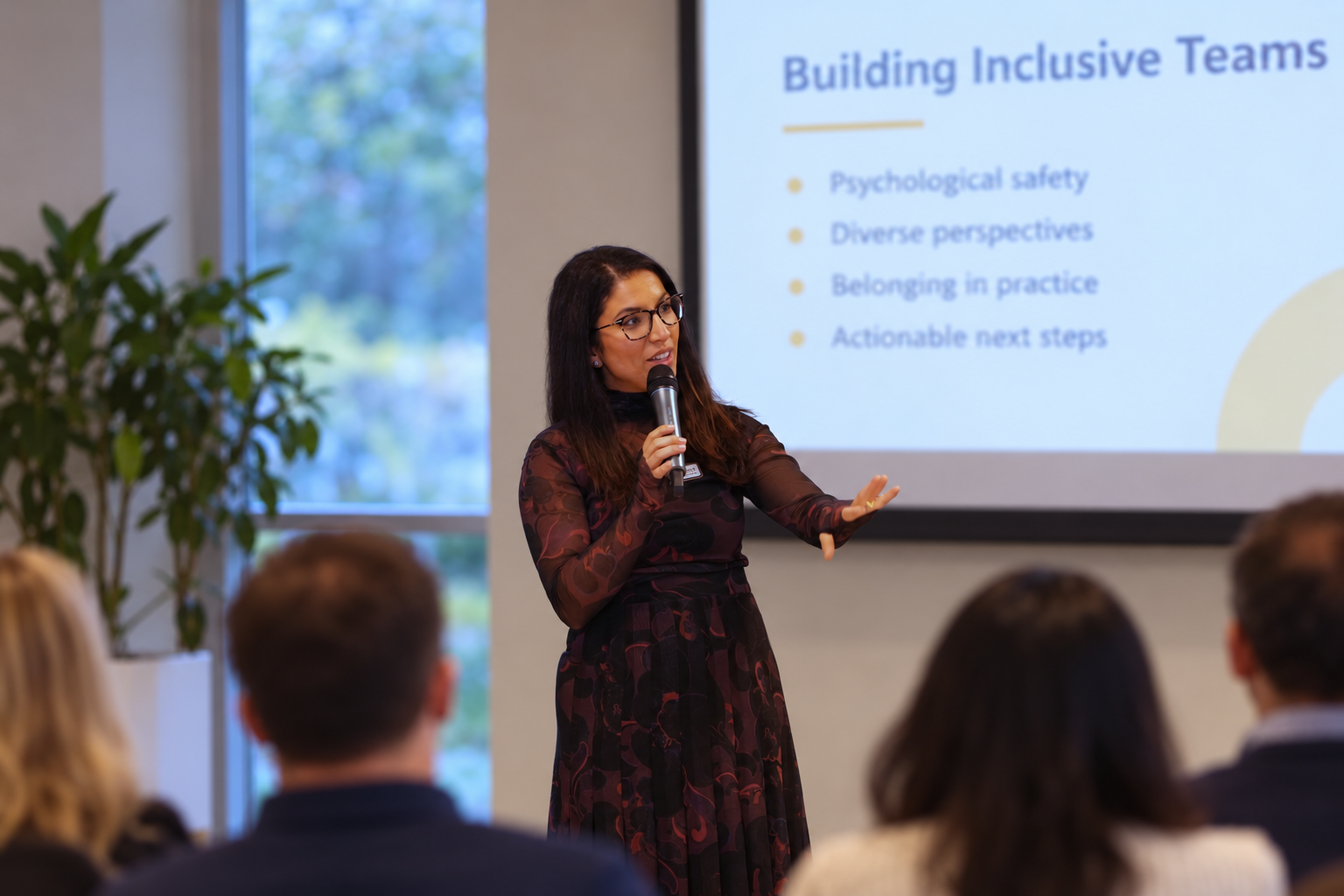
Education & Training Partnerships
We are grateful for the work we have been able to conduct with schools, healthcare teams, businesses, and community organizations to strengthen understanding and support for neurodivergent people.
Jewish Family Services of Colorado
Kevin’s Song
Michigan Psychological Association
Northville Youth Network
Novi Community School District
Parkview Mirro Center for Research and Innovation
Pasadena Villa
Plymouth-Canton Community Schools
Workit Health
Engagement Options


We offer:
Awareness presentations and lunch-and-learns
Interactive workshops and professional development
Leadership and executive sessions
Keynote presentations
Multi-session learning and implementation series
Policy and systems consultation
Ongoing advisory partnerships
Our work is structured, practical, and implementation-focused.
From conversation to action
How We Work Together
Bring your questions, priorities, or an idea you’re still exploring. We’ll work with you to identify a useful next step.
Start With a Conversation
We offer a free, 20–30-minute introductory conversation to learn about your organization, the people you hope to reach, and your priorities. You don’t need a fully developed training request, we can help you explore what would be useful.
A free conversation. No commitment required.
Build The Right Plan For You
Our team reviews your goals and identifies the appropriate expertise, content, and format. We follow up with a proposal outlining the recommended engagement, scope, fees, and next steps, with the agreement included for your review.
A recommendation shaped around your needs.
Put Learning Into Practice
Your engagement may include a presentation, interactive workshop, leadership discussion, or ongoing partnership. We connect the material to your setting so participants can identify practical changes in how they support neurodivergent people.
Relevant learning. Practical next steps.
Tell us a little about your organization using the form below.

A Strategic Investment
Organizations that invest in neurodiversity-informed systems report improvements in performance, retention, morale, psychological safety, culture, and crisis prevention infrastructure. More importantly, they reduce preventable harm.
If your institution is committed to building environments where neurodivergent individuals can learn better, work better, connect better, and lead, we welcome the opportunity to partner with you.
Let’s Work Together